
Myrtillocactus
Known Species
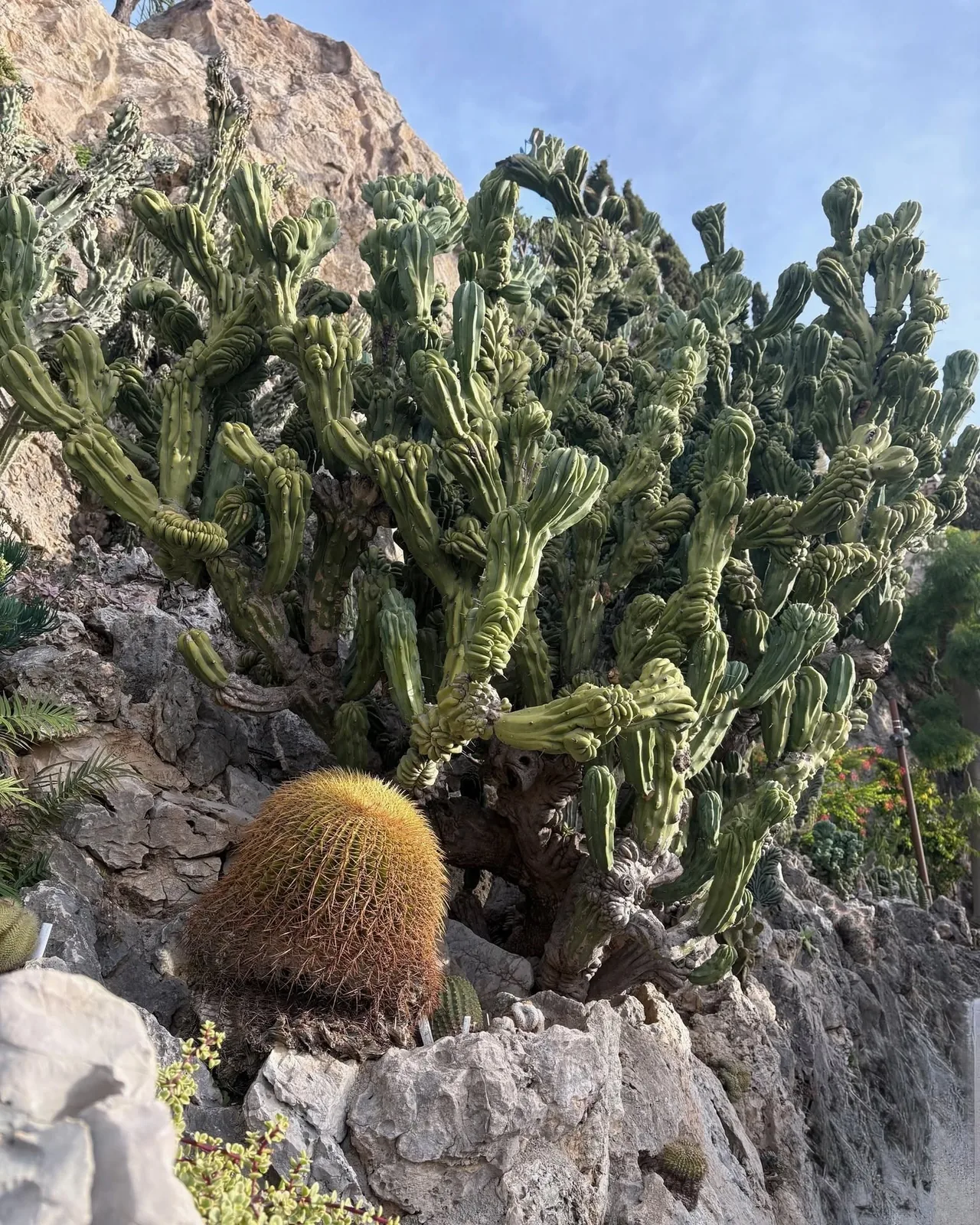
What is Myrtillocactus and what makes it different from other cacti?
Myrtillocactus is a small genus of four accepted species (Kew POWO) of blue-glaucous columnar cacti in tribe Pachycereeae, native to Mexico and Guatemala. Two characters set it apart: a powdery blue-green wax bloom over the epidermis that works as a sunscreen against fierce highland light, and small berry-like fruit, the garambullo, that is sweet and edible. Where giant relatives such as Pachycereus build a massive single trunk, Myrtillocactus branches early into a low candelabra of slender five to six ribbed stems with short spines.
Where does Myrtillocactus grow in the wild?
The genus is endemic to Mexico and Guatemala. M. geometrizans is abundant across central and northern Mexico, through Hidalgo, Querétaro, San Luis Potosí, Guanajuato, Puebla, Oaxaca and Zacatecas, while M. cochal is a Baja California endemic and M. eichlamii reaches south into Guatemala. Plants grow in tropical deciduous forest and xerophilous scrub, usually between roughly 1,000 and 2,000 m, and are often one of the dominant species on the slope.
How big does Myrtillocactus get?
Myrtillocactus species are large, fast, shrubby to tree-like cacti. M. geometrizans builds a short woody trunk and a branching candelabra up to four or five metres tall, and the other species reach a similar scale, with the Baja M. cochal staying shorter and denser. Growth is quick in heat and bright light, which is why the genus is the standard grafting rootstock for slower, rarer cacti.
Is Myrtillocactus fruit edible?
Yes, Myrtillocactus fruit is edible. The round fruit, eight to twenty millimetres across and blue-bloomed, is the garambullo, a sweet little berry that tastes like a tiny bilberry and gives the genus its common name of blue myrtle or bilberry cactus. In Mexico it is gathered fresh and dried as a traditional food, and the fast blue columns are also cut and rooted as living fences. The crested and monstrose ornamental forms rarely fruit, because the mutation that makes them collectible disrupts the normal flowering geometry.
How cold-hardy is Myrtillocactus?
Treat the genus as tender and keep plants above about 4°C / 40°F. They can take brief, bone-dry dips near freezing, but frost damages the blue waxy skin and any grafted or crested tissue, so this is not a hardy outdoor cactus in cold-winter climates. The blue glaucous bloom and the fast vascular tissue that make it good rootstock are the same features that make it frost-sensitive.
What substrate does Myrtillocactus need in cultivation?
A gritty, sharply draining mineral mix, roughly half pumice with lava rock and decomposed granite and a small organic fraction. The genus is a vigorous lowland-to-midland grower rather than a rot-prone cliff miniature, so it tolerates a little more organic matter than a slow high-altitude species would, but fast drainage still matters far more than richness. Skip limestone, skip silica sand, and never let water stand at the base.
Is Myrtillocactus legal to own?
Yes, Myrtillocactus is legal to own and is traded freely as nursery stock. Like all cacti the genus sits on CITES Appendix II, the blanket Cactaceae family listing in force since 1975, rather than the stricter Appendix I, so nursery-grown plants are freely bought, sold and kept and only need export paperwork to cross borders. M. geometrizans is assessed as Least Concern and is common in the wild, so there is no conservation barrier to owning a cultivated plant.
Why is the crested Myrtillocactus boobie cactus so popular?
The viral boobie or breast cactus is a mutation of M. geometrizans, not a separate species. In the monstrose cultivar ‘Fukurokuryuzinboku’ the areoles and ribs swell into soft, rounded, sagging tubercles that read as a row of breasts, while the cristate form fans into an undulating brain-like crest also sold as the Dinosaur Back Plant. Both are slow, sculptural and propagated only by cuttings or grafting. At rarecactus.com we grow our Myrtillocactus from seed in our own greenhouse, and we are transparent that these crested and monstrose novelties are vegetative cultivars, not seed grown plants. See the crested Myrtillocactus geometrizans page for the full story.
Trace any specimen to its wild origin in our Myrtillocactus field numbers.