
Aporocactus
Known Species
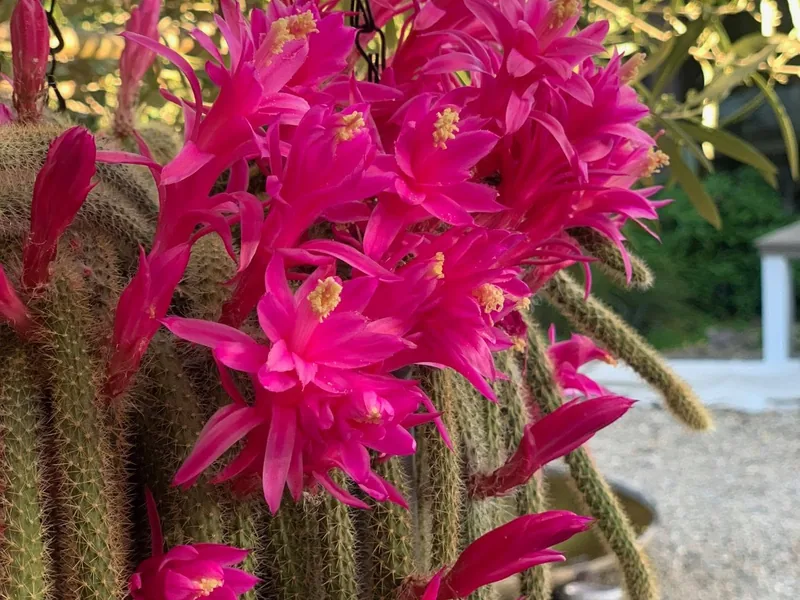
What is Aporocactus and what makes it different from other cacti?
Aporocactus is a small Mexican genus of two epiphytic cacti, the rat tail group, set apart by where and how they grow (Kew POWO). Unlike the globular and columnar desert cacti that fill most collections, these are forest plants that perch on tree branches and rock rather than rooting in open desert grit. Their stems are slender, cylindrical and trailing, hanging in long whip-like ropes, and they open vivid magenta flowers by day. That pendant, round-stemmed, epiphytic habit is what separates Aporocactus at a glance from both the desert barrels and the flat, leaf-like stems of true Disocactus, the genus it was once folded into.
Where does Aporocactus grow in the wild?
The genus is endemic to Mexico, where it lives as an epiphyte on forest trees and as a lithophyte on rock, rooting in pockets of leaf litter and moss. The best-known species, the rat tail cactus, Aporocactus flagelliformis, is most often recorded from Oaxaca and Hidalgo, with some reports from Puebla and Veracruz. Pinning down the exact range is hard: the rat tail has been in cultivation for some three hundred years and is rarely recorded in habitat, so its true wild distribution and elevation band are uncertain, and old claims of a South American origin are now discounted.
How big does Aporocactus get?
Aporocactus is a trailing cactus rather than a tall one. Each slender cylindrical stem runs to roughly one to two metres long but only about one to two centimetres thick, branching freely from the base so a settled plant becomes a dense curtain of pendant growth. Grown in a hanging basket, the stems spill over the rim and lengthen quickly in warmth, which is part of the genus’s easy reputation. Growth is fast for a cactus, and a young plant fills a basket within a few seasons.
What do Aporocactus flowers look like?
The flowers are the signature of the genus: day-opening, borne laterally along the stems, and zygomorphic, meaning bilaterally rather than radially symmetric, built as a tube for a hovering pollinator. Colour runs through vivid magenta-pink to crimson, the tube about five to eight centimetres long and two and a half to four across. Each bloom lasts three to five days, with the whole display spread over several weeks in late spring and early summer. Unlike many night-flowering forest cacti, Aporocactus performs by day.
How cold-hardy is Aporocactus?
Not very, because this is a frost-tender forest genus rather than a high-desert one. Keep it above about 5°C and off frost, roughly USDA zones 10 to 11. Brief dips toward freezing may be survived by a dry, established plant, but wet cold rots the stems quickly. The useful cold is a cool, drier winter rest near 7 to 10°C, which is what sets the buds: held warm and watered all winter, the plant grows on but flowers poorly.
What substrate does Aporocactus need in cultivation?
More organic than a desert-cactus mix, which is the single biggest difference from the rest of this site. As epiphytes the rat tail cacti root in leaf litter and bark, so they want a free-draining but moisture-retentive, slightly acidic, humus-rich medium: around a third low-nutrient organic matter such as leaf mould or composted bark, with the rest sharp mineral grit of pumice, lava and granite to keep it from ever turning to mud. Avoid limestone and silica sand. A practical shortcut is two-thirds of a standard gritty cactus mix to one-third leaf mould.
Is Aporocactus legal to own?
Yes, Aporocactus is legal to own and is traded freely. Like the entire cactus family, Aporocactus sits on CITES Appendix II, not the stricter Appendix I, so nursery-propagated plants are owned and traded normally, with paperwork only for crossing borders. The rat tail is a thoroughly secure cactus in cultivation, grown by the million as a houseplant, so no wild-collection question hangs over it. At rarecactus.com we grow our Aporocactus from seed and from stem cuttings in our own greenhouse, which keeps wild populations untouched and gives plants with the natural form of the species.
Why is the rat tail cactus the most popular Aporocactus?
The rat tail, Aporocactus flagelliformis, is the one species almost every grower meets, and most still know it by its older trade name Disocactus flagelliformis. It has been a windowsill staple for some three hundred years: cheap, close to indestructible, and quick to flower vivid magenta from a young age, with soft bristles you can handle and a trailing habit made for a hanging basket. The Royal Horticultural Society gave it an Award of Garden Merit on that record, which is why it makes such a good first epiphytic cactus and the genus’s signature plant.
Trace any wild-collected specimen to its origin in our Aporocactus field numbers.