
Ariocarpus
Known Species
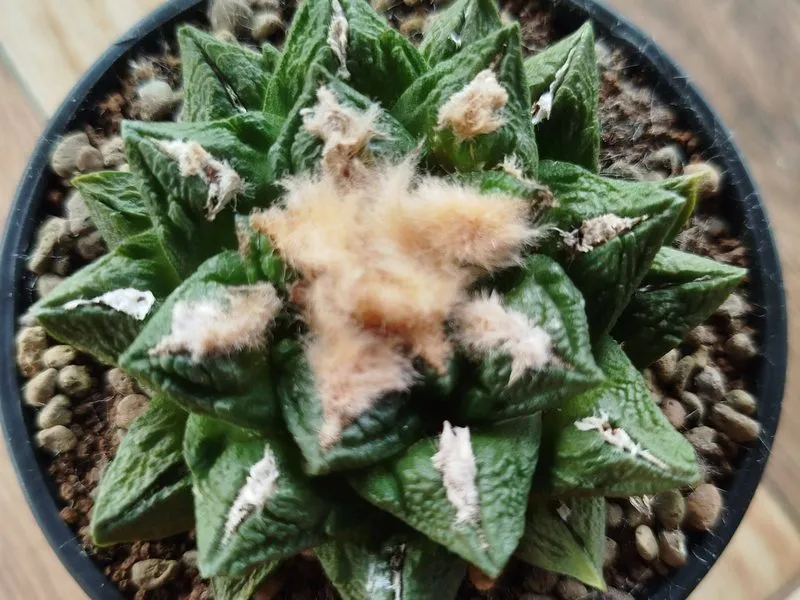


For a deeper, species-by-species treatment of the genus, see the Ariocarpus species atlas at our companion reference site. Trace any specimen to its wild origin in our Ariocarpus field numbers database. For soil mixes, watering rhythm, and seasonal handling, start with our full Ariocarpus care guide.
Growing Ariocarpus
Ariocarpus grow from a swollen taproot, and nearly every care decision protects it: strong light, a fast mineral mix, water only through the warm growing season, and a completely dry winter rest.
- Sun exposure
- Full sun
- Give it full sun or your brightest position. Shade cloth at 30 to 40 per cent through the hottest summer weeks stops bronzing on growth that has not hardened.
- Watering
- April to October only
- Soak, then let the mix dry out completely before watering again, April to October, with growth peaking in late summer. From November to March keep the plant bone dry.
- Soil
- 95% mineral
- About 95 per cent mineral (pumice, lava, granite grit, zeolite, limestone chip) plus 5 per cent worm castings. Hard tap water already supplies calcium; rainwater growers rely on the limestone.
- Cold tolerance
- Dry rest at 5–10°C
- Kept completely dry, plants ride out brief frost to about −5°C, but cold with wet soil rots the taproot. A dry 5 to 10°C winter rest is safest.
- Container
- Deep pot
- Use a deep pot for the fleshy taproot; unglazed terracotta helps in humid climates. Repot in spring, no more than every two to three years.
- Growth rate
- 10+ years to flower
- Very slow. Seedlings need two to three years to reach thumbnail width, and most species take ten years or more to flower from seed.
What is Ariocarpus, and why is it called the living rock cactus?
Ariocarpus is a genus of slow-growing cacti in the family Cactaceae, native to the Chihuahuan Desert of Mexico and a thin strip of south Texas. Every species grows nearly flush with the soil surface, its rough, grey-green tubercles mimicking the surrounding limestone gravel so closely that plants vanish until their large autumn flowers give them away.
Where does Ariocarpus grow in the wild?
All species are confined to the Chihuahuan Desert biome, with the centre of diversity in the Mexican states of Coahuila, Nuevo León, San Luis Potosí, Tamaulipas, and Zacatecas; A. fissuratus alone crosses the US border into Brewster and Presidio counties in south Texas. Species occupy limestone and gypsum outcrops at elevations ranging from around 500 m to over 2,000 m.
What feature makes Ariocarpus instantly recognisable?
The defining character is a flattened, rosette-forming body composed of thick, hard, triangular tubercles deeply fissured enough to match the texture and colour of weathered limestone. Unlike most cacti, mature Ariocarpus carry no spines at all; spines appear only on seedlings and are shed as the plant matures. A massive taproot, often several times the mass of the visible stem, anchors the plant below ground.
When does Ariocarpus flower?
Ariocarpus blooms in autumn, typically from October into early November. Flowers are funnel-shaped, roughly 2.5 to 4 cm across, and appear singly from the woolly central areole in white, pale yellow, pink, or deep magenta depending on the species. The blooms often seem to erupt directly from the limestone itself, which is frequently the only way hikers spot wild plants.
How long does Ariocarpus take to grow from seed?
Seed grown Ariocarpus are among the slowest cacti in cultivation: seedlings typically take two to three years to reach the width of a thumbnail, and most species require at least ten years before producing a first flower. Full adult size, ranging from roughly 8 cm in A. kotschoubeyanus to 20 cm in A. retusus, can take several decades.
Is Ariocarpus protected under CITES?
Every Ariocarpus species is listed under CITES Appendix I, the convention’s most restrictive category, adopted at the 1992 Kyoto meeting to cover the whole genus. Commercial international trade in wild-collected specimens is prohibited; purchasing a seed grown plant from a registered nursery within your country is legal, but cross-border shipment requires official CITES documentation.
Which Ariocarpus species is the rarest?
Ariocarpus bravoanus, endemic to a handful of sites in San Luis Potosí, is assessed as Critically Endangered by the IUCN and is considered the rarest species in the genus. Multiple known localities have been severely depleted by illegal collection and agricultural conversion. A. agavoides and A. scaphirostris, each known from a single natural locality, share a similarly precarious status.
What substrate does Ariocarpus need in cultivation?
In the wild, Ariocarpus roots into calcareous soils composed largely of weathered limestone chips with minimal organic content. In cultivation, every Ariocarpus page on this site uses one mineral mix: 43% pumice, 20% granite grit, 15% lava, 12% limestone chip, 5% zeolite and 5% worm castings. It drains within two to three days of watering, and the low organic share protects the taproot from rot. The limestone share is grower convention; on hard tap water, which already carries calcium, it can come down.