
Avonia
Avonia Species & Types
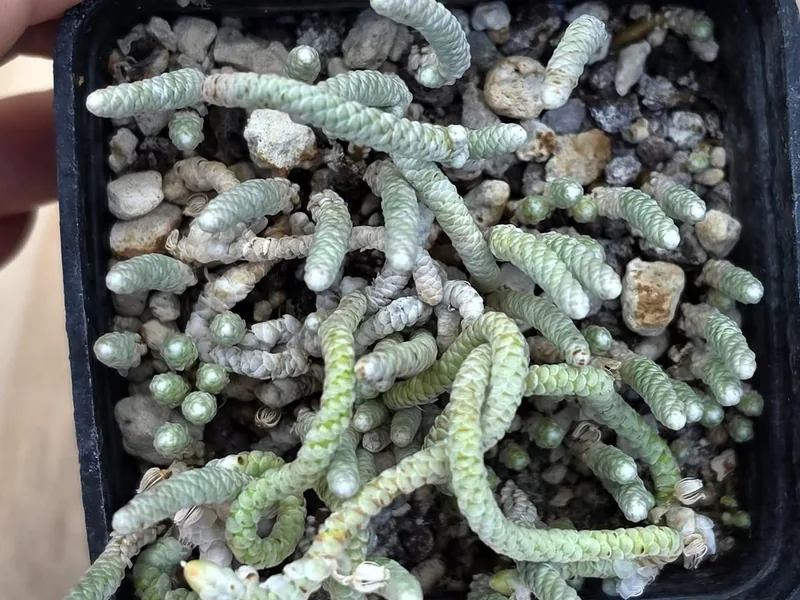
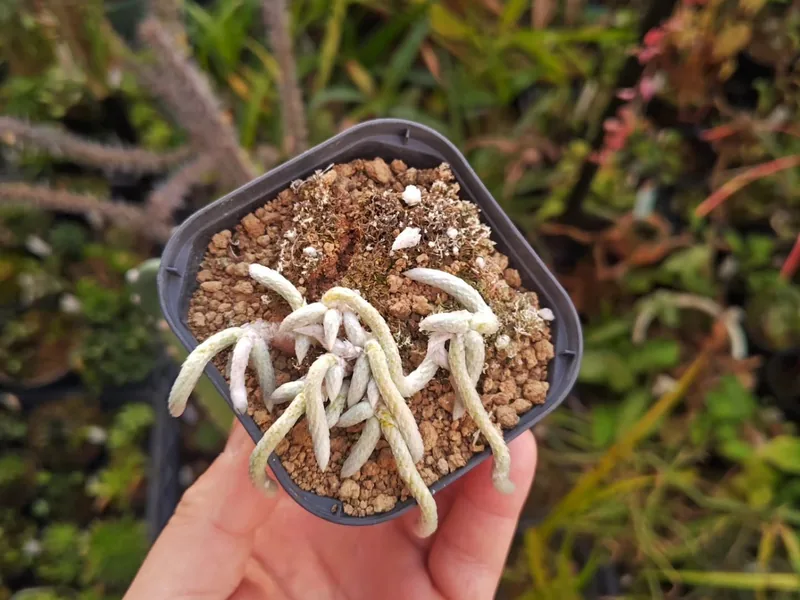
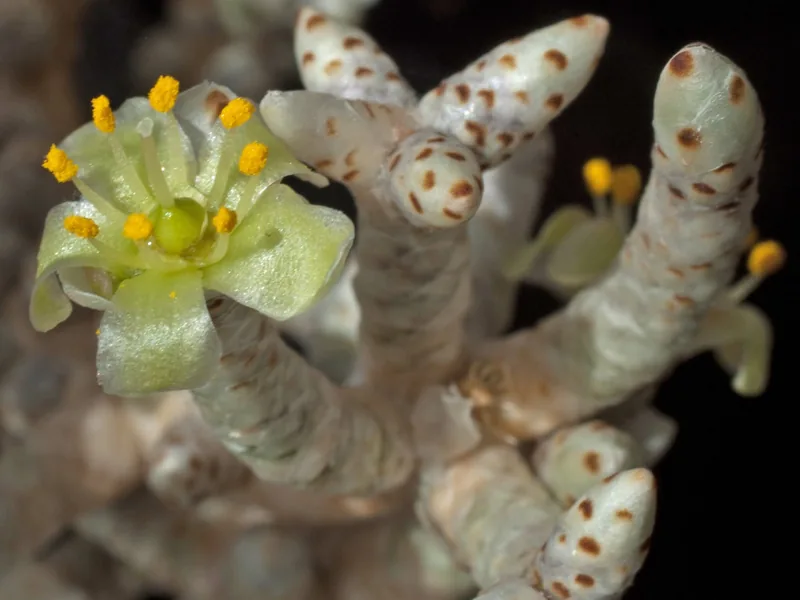
What is Avonia and what makes it different from Anacampseros?
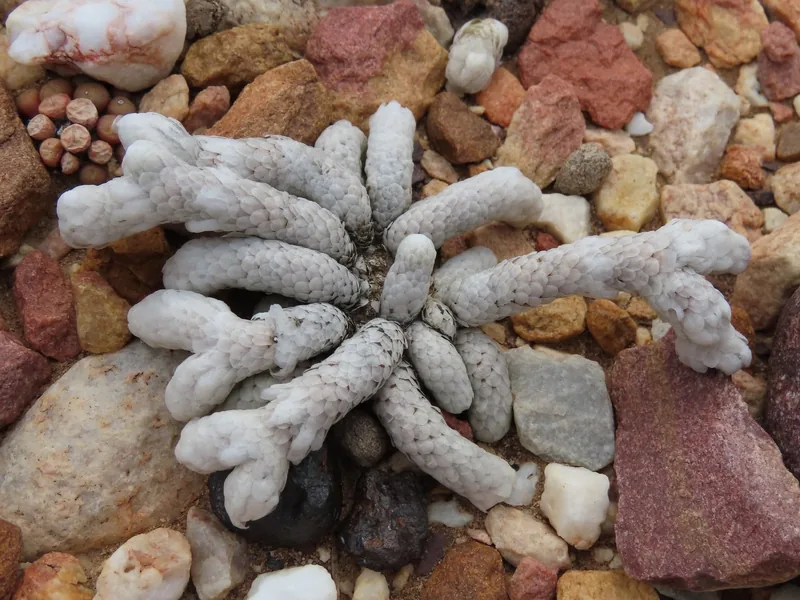
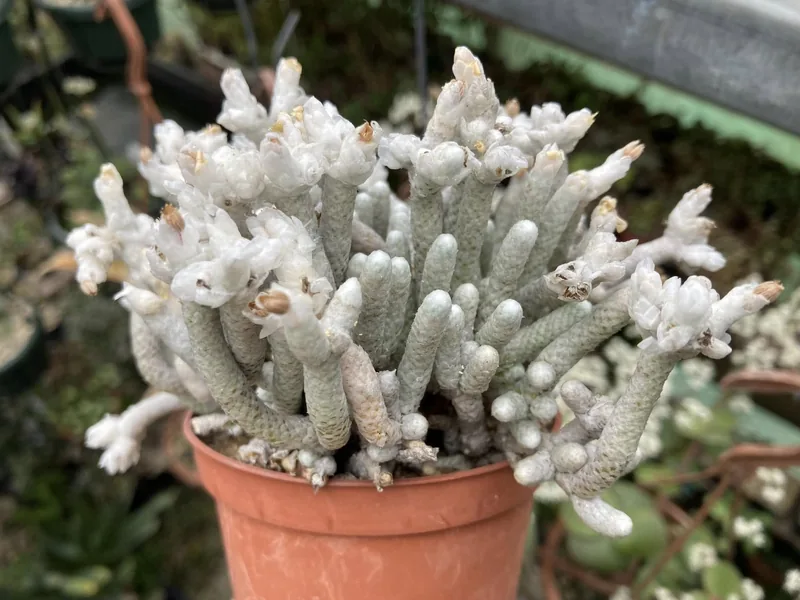
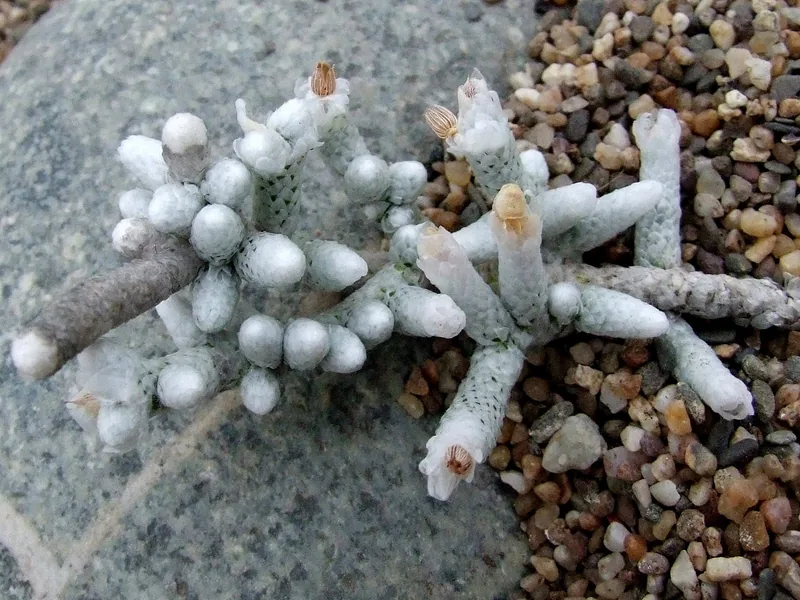
Avonia is a genus of about a dozen names from southern Africa, seven of them accepted and covered here. Its leaves set it apart from Anacampseros: in Avonia the tiny leaves hide beneath overlapping papery white or silver stipular scales that clothe the stems, while true Anacampseros carries larger naked leaves. That scale-covered, almost reptilian look, over a swollen underground caudex, is the signature of the genus and the reason growers keep the two apart. There is a live disagreement between the major authorities on the name. Kew’s Plants of the World Online sinks Avonia back into Anacampseros and accepts none of its names, while the GBIF Backbone Taxonomy accepts the genus. We follow GBIF and publish under Avonia, the name collectors and CITES both use, and note the POWO position here for accuracy.
Where does Avonia grow in the wild?
Avonia is endemic to southern Africa, ranging from the winter-rainfall quartz fields of Namaqualand and the Richtersveld north into Namibia and east across the arid interior. Most species are quartz-field or Nama Karoo plants that sit half-buried among pale gravel, where the white stipular scales double as camouflage and sunscreen. The range is not uniform, and two species break the quartz-field pattern: A. ustulata grows on Karoo shale rather than quartz, and A. papyracea subsp. papyracea is an Eastern Cape endemic. A. albissima has the widest range of the group, reaching from Angola south to Griqualand West.
How big does Avonia get?
Avonia plants are small, built around a swollen caudex that stores water below ground while short scaly branches sit at or just above the surface. The caudex is usually a few centimetres across, reaching 5 to 10 cm in the largest species such as A. dinteri, and the branches run from stubby knobs to worm-like stems a few centimetres long. A. papyracea is the exception in habit, sprawling flat across the gravel in stout white snake-like arms. Growth is slow, which is normal for a quartz-field succulent, and a mature caudex represents many years in the ground.
What do Avonia flowers look like?
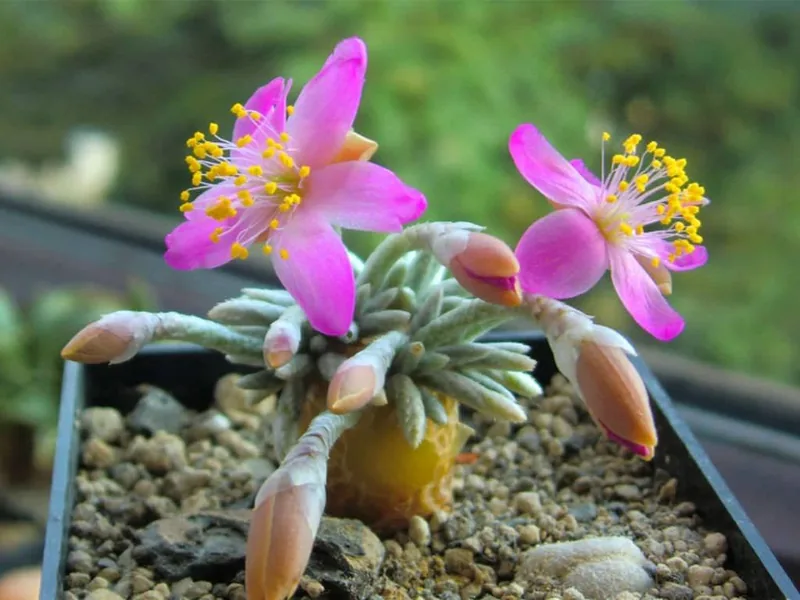
Avonia flowers are small and easy to miss. They push out from the tips of the scaly branches and open for only a few hours on warm afternoons, usually white to pale pink or straw-yellow, with a simple five-petalled shape a centimetre or less across. Many plants are self-fertile and set seed readily even from a single specimen, so a brief unnoticed opening still produces the fine seed capsules. The quiet, short-lived bloom is part of why Avonia is grown for its sculptural scaled body first and its flowers second.
How cold-hardy is Avonia?
Avonia is frost-tender and should be kept above about 5°C, roughly USDA zones 9b to 11 with protection. These are plants of hot, dry, winter-mild southern African habitats, and while a dry, dormant caudex will shrug off a brief cold night, sustained frost or wet cold rots the fleshy rootstock quickly. The safe approach in a cool climate is a bright, frost-free greenhouse or windowsill, with water withheld through the dormant season so the plant rides out winter dry.
What soil does Avonia need in cultivation?
Avonia needs a sharply draining, almost entirely mineral soil, because the swollen caudex rots at the first sign of standing moisture. Across the seven species this site covers, the mineral fractions run as a house formulation of pumice, silica grit, lava and granite, and the two components with any cultivation evidence behind them, organic and limestone, hold to the same figures genus-wide: 5 per cent organic and no lime, set by the arid caudiciform rot class across the genus rather than by the rock at any one locality. Match the watering to the rainfall regime rather than the calendar: the Namaqualand quartz-field species are winter growers, while the Karoo and Eastern Cape outliers A. ustulata and A. papyracea follow a summer rhythm, so the genus does not take a single blanket schedule.
Is Avonia legal to own?
Yes, Avonia is legal to own, with one recent change for A. quinaria. Avonia falls under CITES Appendix II through the genus listing of Anacampseros spp., which has carried the annotation ‘Includes Avonia spp.’ since 1975, so nursery-grown plants are traded normally with permits needed only to cross borders. The exception is A. quinaria, which was moved up to the stricter Appendix I at the 2025 CITES conference, in force from 5 March 2026; its parts and derivatives, seeds included, are no longer exempt, while the other six species covered here remain on Appendix II, where artificially propagated seed stays exempt. At rarecactus.com we raise our Avonia from seed in our own greenhouse and keep the wild locality behind each line on record, so filling an order never lifts a caudex from a quartz field.
Which Avonia should a collector start with?
Avonia papyracea is the usual first plant of the genus, because it is the one widely offered as seed and the most forgiving of the scaly southern African succulents once its drainage is right. Its stout white snake-like branches also make it the most recognisable Avonia on a bench. The plant most collectors actually covet is Avonia quinaria, with its turnip-shaped caudex and stipules ranked in neat fives; it is also the only species now on CITES Appendix I, so documented, nursery-grown provenance matters more for it than for any other Avonia.